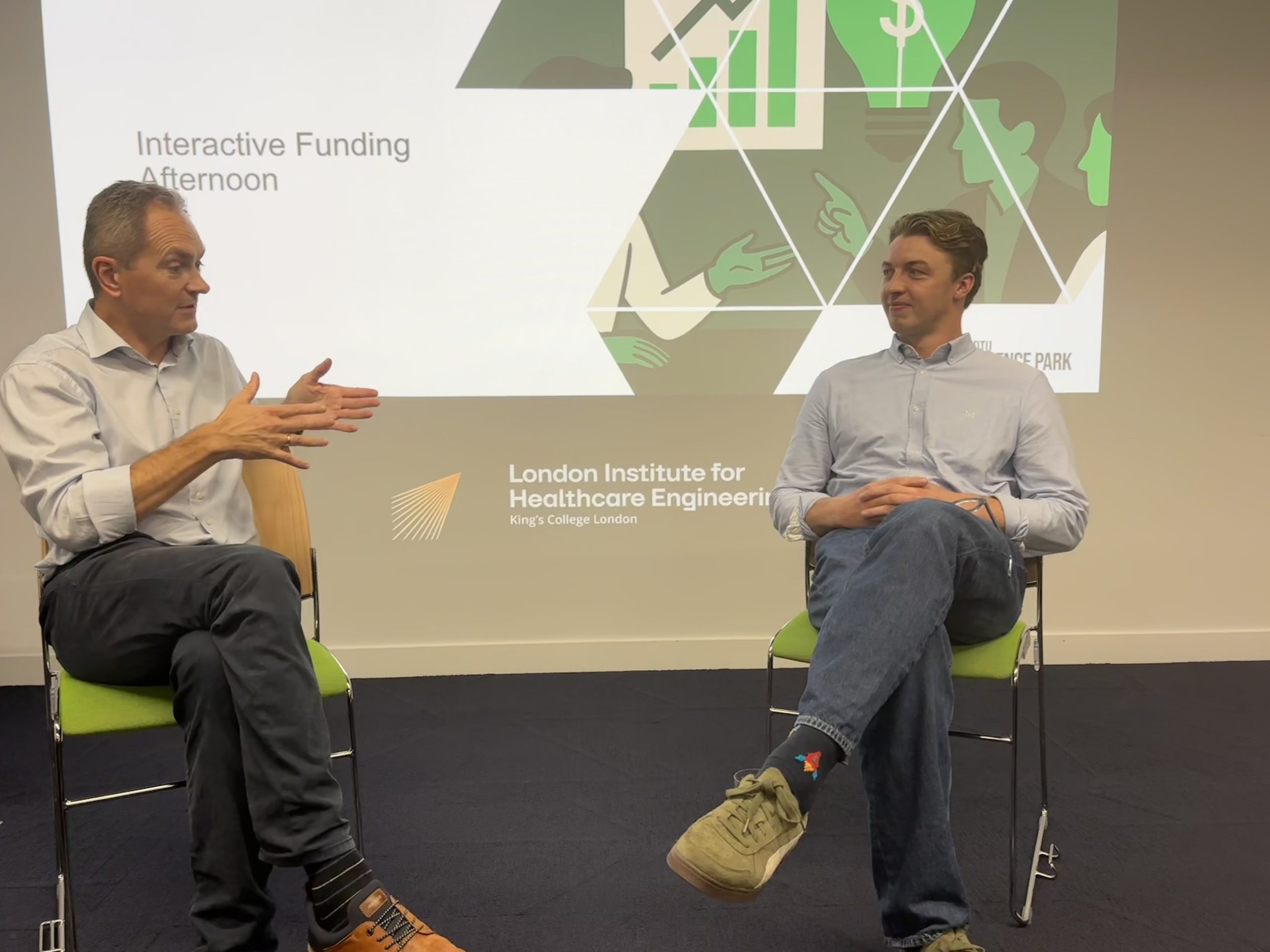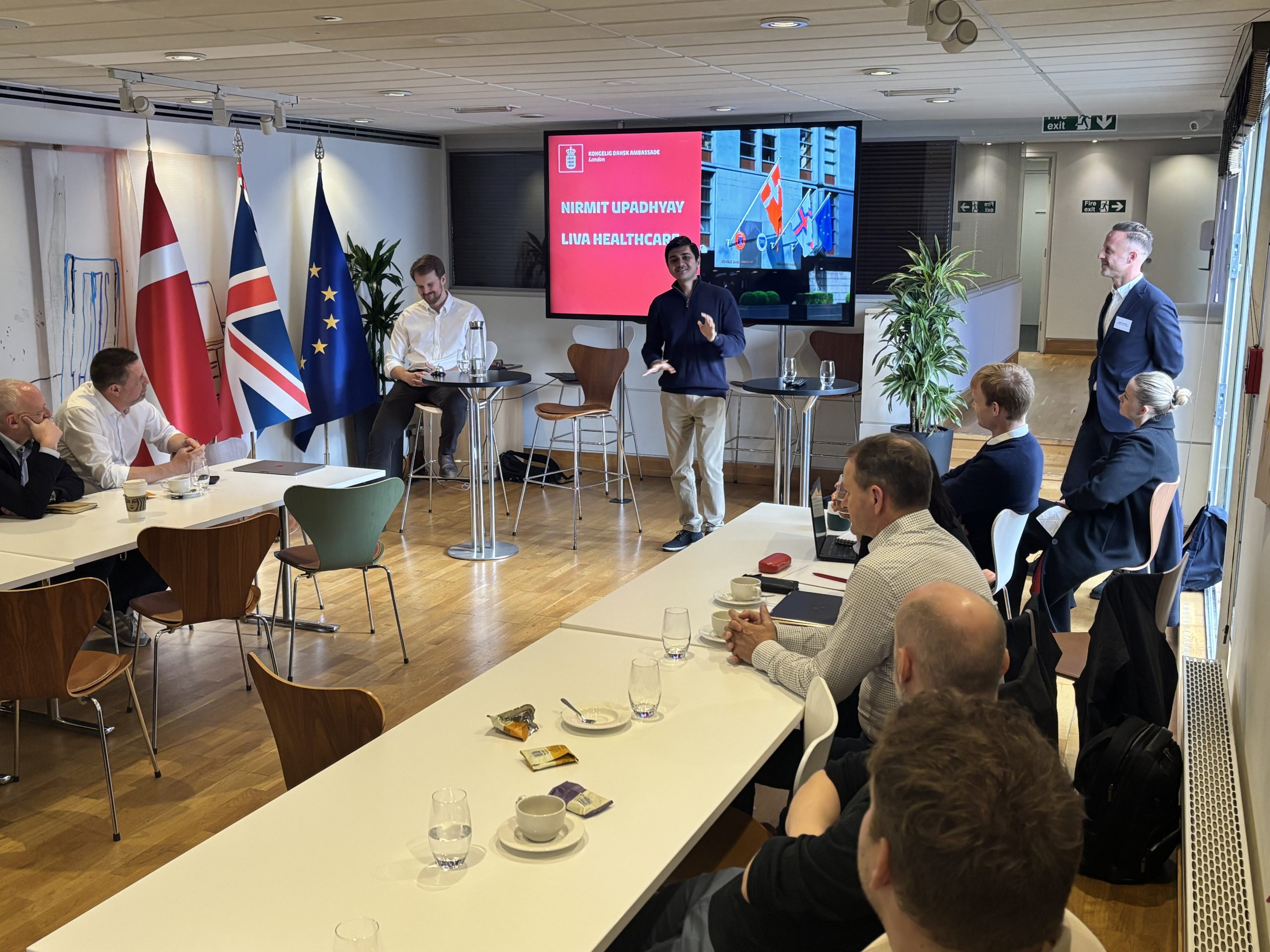
Building a MedTech company is as much a psychological discipline as it is a technical one. Capital does not flow to the most elegant solutions, but to the founders who demonstrate clarity, momentum, and an ability to navigate uncertainty with intent. The London trip made this explicit. Again and again, investors and experienced operators returned to the same point: investors do not “figure out” whether a company is worth believing in. Founders must make that belief easy by showing clear priorities, disciplined execution, and continuous progress.
This article distils the strategic and behavioural lessons that matter most when securing capital, with a particular focus on mental discipline, investor interaction, and the deliberate creation of fear of missing out.
Clarity before conviction
Investors respond to founders who are clear-minded about what needs to be proven next. Not eventually. Not in theory. Next.
One of the strongest messages from London was the importance of ruthless prioritisation. As David Groom, Investment Manager at Cambridge Deeptech Lab, put it plainly: “Be really clear-minded about what you need to prove out. Move quickly.” Founders must know exactly which assumption is most fragile at their current stage and design their activities around validating or invalidating it quickly. This could be clinical relevance, willingness to pay, regulatory feasibility, or buyer identity. What matters is not the domain, but the discipline.
The most effective founders operate with what several participants described as “mental boxes”. They separate vision from validation and hypothesis from evidence. Rather than attempting to convince everyone, focus needs to be narrowly on identifying who actually cares about the technology and who would buy it. If an archetype shows no interest, they must move on. Fast.
This approach is not pessimistic, but respectful of time. There are no shortcuts in MedTech, but there is also no virtue in spending years pursuing a market that does not exist. Discipline in knowing when to stop is as important as persistence in knowing when to continue.
Fail fast is not a slogan
“Fail fast” is often treated as a startup cliché. In reality, it is an operational strategy.
The London discussions reinforced that founders must aggressively time-box their experiments. Customer discovery, fundraising outreach, and pilot discussions should all have clear start and stop points. If momentum does not materialise within that window, the response is not to wait longer, but to pivot. As David Groom warned founders directly: “Please don’t spend five years of your life trying to do something that won’t work. If it’s not working, move on quickly.”
This mindset requires emotional resilience. It also requires honesty. Investors are far more comfortable backing a founder who has killed weak ideas early than one who clings to them for too long. Decisiveness signals maturity.
The underlying philosophy is simple: solve problems that people genuinely care about. If that signal is not present, moving on is not a failure. It is good judgement, even if it is one of the hardest decisions a founder will ever make. The London message was clear: difficult as it is, it is almost always the right call.
Investor relations are behavioural, not transactional
Many founders underestimate how quickly investors form impressions. The London sessions made clear that small behavioural signals carry disproportionate weight.
In written outreach, attention to detail matters. Automated-looking emails, including tell-tale signs like the m-dash, signal low effort. As Jamie Giles, investor at SuperSeed, noted, these details suggest that a founder “hasn’t even gone in and played around with it a little bit.” Investors see hundreds of approaches a year and are finely tuned to anything that signals laziness or lack of care. A clean, human, intentional message performs better than a polished but generic one.
On calls, energy matters as much as information. “It’s quite valuable for the investor to feel excited,” Jamie Giles explained. “You feed off that person’s energy.” This is not about performance or exaggeration. It is about demonstrating that the founder genuinely cares. Low energy, even if understandable, is often interpreted as low conviction.
Preparation also extends to targeting. Reaching out to the right fund is not enough. Founders must identify the right person within that fund. As Jamie Giles pointed out, even approaching the right fund through the wrong partner can quietly kill a deal before it begins.
Follow-up is a founder responsibility
One of the most consistent investor messages in London was also one of the simplest: founders are not pushy enough.
If an investor asks for a deck, a data room, or a follow-up and nothing arrives, the opportunity dies silently. Investors are busy and rarely chase. As Jamie Giles admitted openly: “I’m not organised enough to remind founders. I’ll just leave it.” The responsibility to maintain momentum sits squarely with the founder.
Effective follow-up is persistent but professional. Multiple follow-ups over a short period are not only acceptable, they are expected. “There’s a tendency to be under-pushy,” Jamie Giles said. “But you need to be pushy. What have you got to lose?” There is little downside. A clear no is more valuable than indefinite silence, and even rejection can be leveraged for feedback or introductions if handled directly and on the call.
Relentlessness, when paired with respect, is perceived as a strength. Venture-scale companies are built by founders who do not disappear. Follow up more than once. Be visible.
And yes, you are allowed to call.
Creating FOMO is an active process
Fear of missing out does not emerge organically. You can engineer it.
One of the most powerful levers discussed in London was public signaling of progress. Founders who consistently communicate milestones, learning, and traction, particularly through platforms like LinkedIn, create narrative momentum. As Jamie Giles reflected, seeing steady, well-framed updates can trigger reassessment: “You look again and think, did I miss something?”
This does not require exaggeration. It requires consistency, authenticity, and visibility. When investors see progress framed attractively and notice their peers engaging with it, reassessment follows. FOMO is triggered not by hype, but by the perception that something important is happening without them.
Founders should treat this as part of the fundraising process rather than optional marketing. The goal is not virality, but relevance.