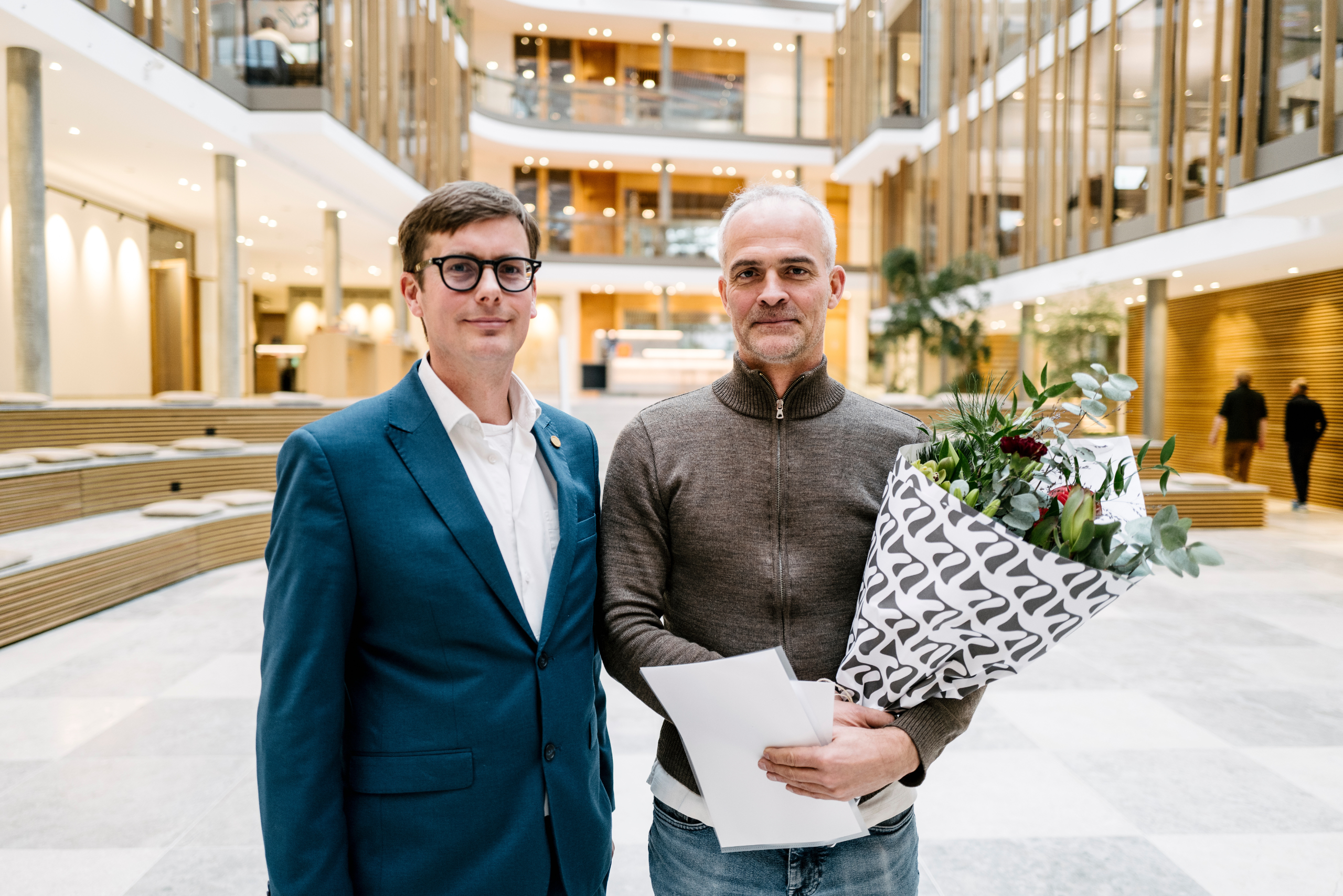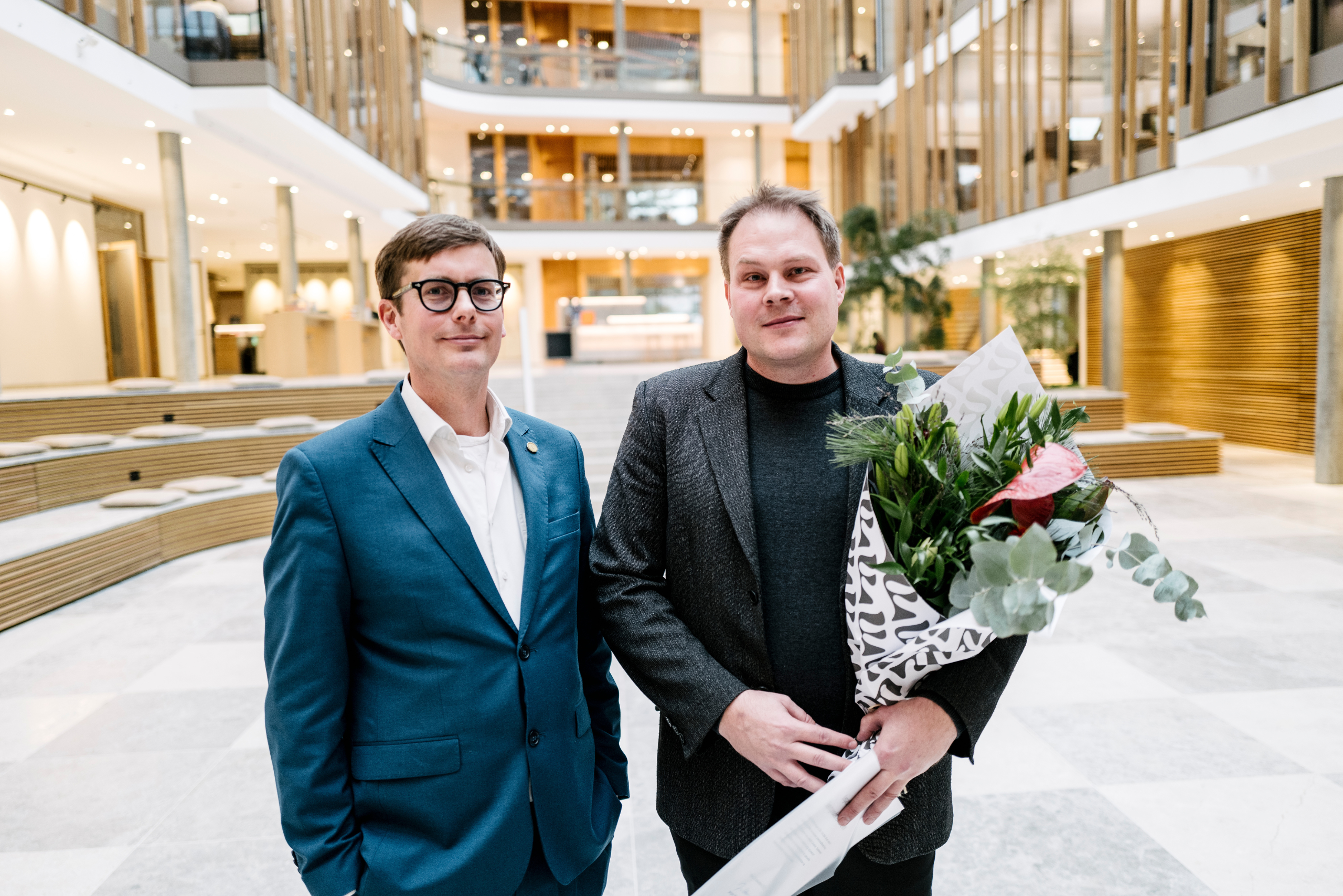
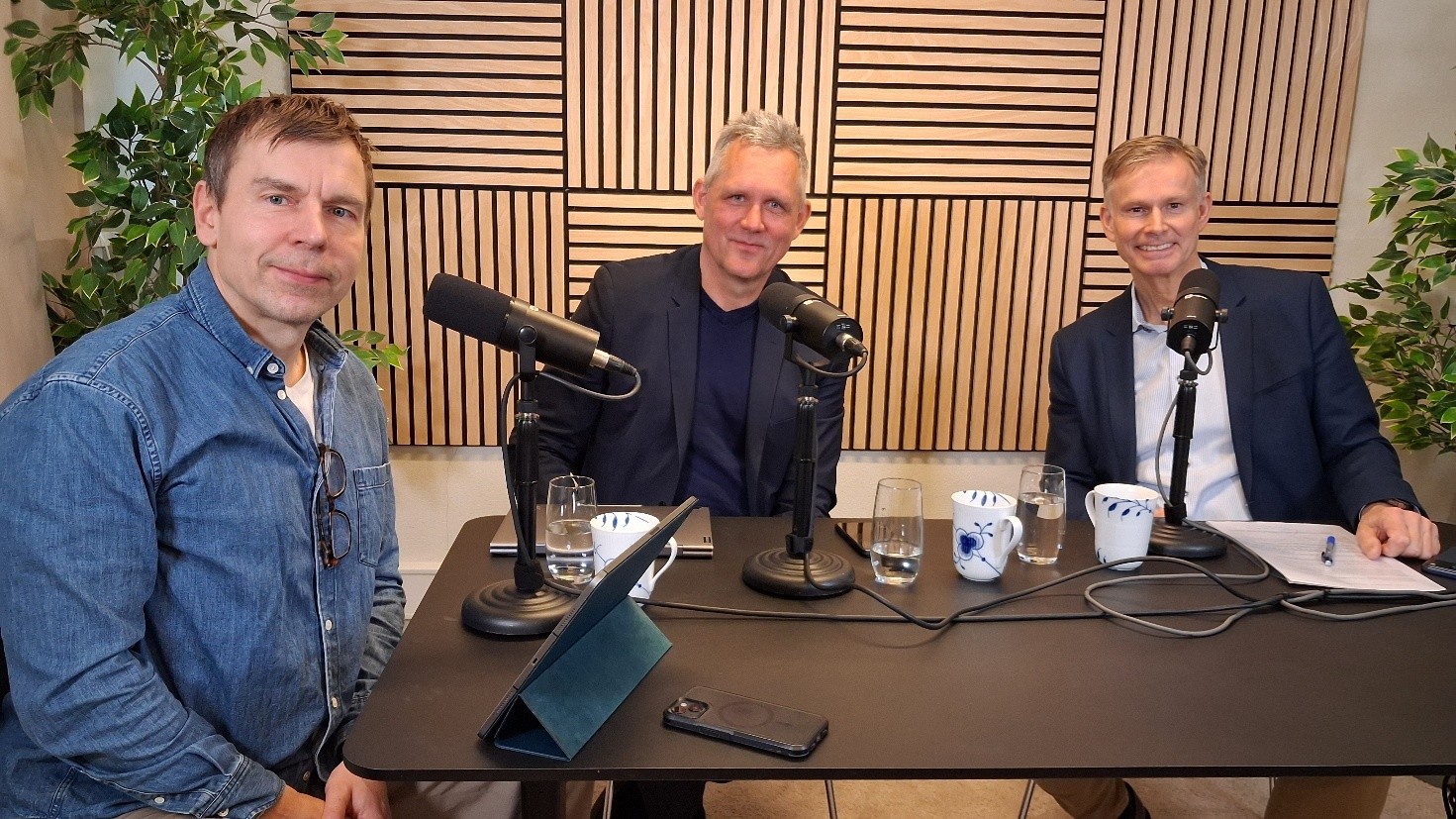
That question was at the heart of the conversation when Steen Donner, CEO of DTU Science Park, and Mikkel Skovborg, Vice President, Innovation at the Novo Nordisk Foundation, met in the podcast Business Review Life Science.
Listen to the podcast in Danish below:
They discussed how collaboration between research, investment and industry can be strengthened and why coherence across the entire value chain has become decisive if Denmark is to remain a strong life science nation in the future.
The reality is more complex than many imagine.
“From basic research to something we can actually offer patients, it can easily take 10 to 15 years.”
Steen Donner, CEO, DTU Science Park
“Typically, it costs more than DKK 2 billion. So it’s an expensive undertaking.”
Mikkel Skovborg, Vice President, Innovation, Novo Nordisk Fonden
When strong research does not automatically translate into impact
Denmark has internationally recognised research. Yet historically, there has been a paradox in the ecosystem, explains Mikkel Skovborg. “We had exceptionally strong research, but very limited translation of those results into clinical practice – and ultimately to patients”. The problem has rarely been a lack of good ideas. It has been the transitions:
- from university to startup,
- from technology to investment readiness,
- from innovation to regulation, market and scaling.
It is in these transitions that momentum is lost and where the risk arises that promising projects never reach the patient. According to Steen Donner, the objective is to make the entire system work better together: “It’s about getting the system to work efficiently together, so things can move faster.” At the same time, he points to a central challenge for many startup companies:
“They don’t have a huge back office to rely on… so it’s about helping them understand who to draw on and making the path as straight as possible towards the goal.”
This is where innovation environments take on a more strategic role, not as owners of innovation, but as coordinators of capabilities, speed and decision-making across the value chain.
DTU Science Park as a key component of the value chain
For foundations and investors with mandates to invest billions, it is crucial that the very early stages of the value chain operate professionally. Otherwise, there is simply not a sufficiently mature foundation to build on.
As Mikkel Skovborg puts it:
“We are deeply dependent on having people like Steen Donner and his team at DTU Science Park. We source a great deal from DTU and rely on them to work professionally with the very early-stage projects. If they didn’t, we would have a challenge.”
Mikkel Skovborg Vice President, Innovation, Novo Nordisk Fonden
If early projects are not properly matured, technologically, regulatorily and organizationally, the rest of the value chain becomes slower, more expensive and significantly more risky.
When large and small companies accelerate each other
A decisive factor in making the value chain work in practice is creating environments where large and small actors do not operate in parallel, but in interaction.
At DTU Science Park, a strong cluster of life science companies of all sizes has been built, from established companies such as Novonesis and ALK to very early-stage startups. According to Steen Donner, this interaction is essential:
We create the space for innovation.
Steen Donner
CEO, DTU Science Park
These frameworks are not just about physical location, but about access. Access to resources, infrastructure and expertise that early-stage companies rarely possess themselves. This includes laboratories, testing facilities and specialised equipment, as well as connections to the wider ecosystem of investors, advisors, IP experts and regulatory specialists.
When large and small companies meet in the same environment, a mutual dynamic emerges: smaller companies gain access to experience, scale and networks, while larger companies gain early insight into new technologies and research-based solutions. This is where speed is created, not by pushing innovation harder, but by removing unnecessary barriers.
When the value chain must also hold in the later stages
Coherence in the life science value chain is not only about the early phases. Access to capital is also critical in the later stages, especially if knowledge and IP are to remain in Europe.
Here, Mikkel Skovborg points to a structural challenge that has long affected European companies:
“When projects become mature enough, they require very large investments and today, that capital is often only available in the US or Asia.”
To address this, work is underway to establish a large C fund capable of making substantial investments in European companies:
“We are in the process of establishing a very large C fund, where we can invest between DKK 50 and 150 million, to keep the IP we develop in Europe in European hands for longer.”
The point is clear: if the value chain only functions in the early phases, impact risks being lost in the later ones. Coherence must be thought through end to end from laboratory to scaling and global markets.
How do we prevent life science and medtech companies from losing momentum?
DTU Science Park works systematically to reduce friction in the phases where many life science and medtech companies otherwise lose time and momentum.
One example is MedTech Growth, DTU Science Park’s growth program for startups developing medical devices and navigating complex regulatory requirements. The program is designed to help companies build a solid foundation early, making the path to market clearer, faster and more predictable, both nationally and internationally.
Read more about MedTech Growth here
From potential to patient
Maintaining Denmark’s position as a life science nation requires continued investment not only in research and capital, but in the coherence between them.
Because when it takes 10–15 years and billions of kroner to bring a product to the patient, the greatest risk is not collaborating too much, but too little.
DTU Science Park works to create coherence across the entire value chain, from research and early-stage startups to capital, scaling and market access.
When life science innovation is both long-term and capital-intensive, professional frameworks, coordination and speed become decisive. That is why DTU Science Park’s role is not only to host companies, but to reduce friction and strengthen the connections within the ecosystem where new knowledge must be translated into real impact for patients and society.